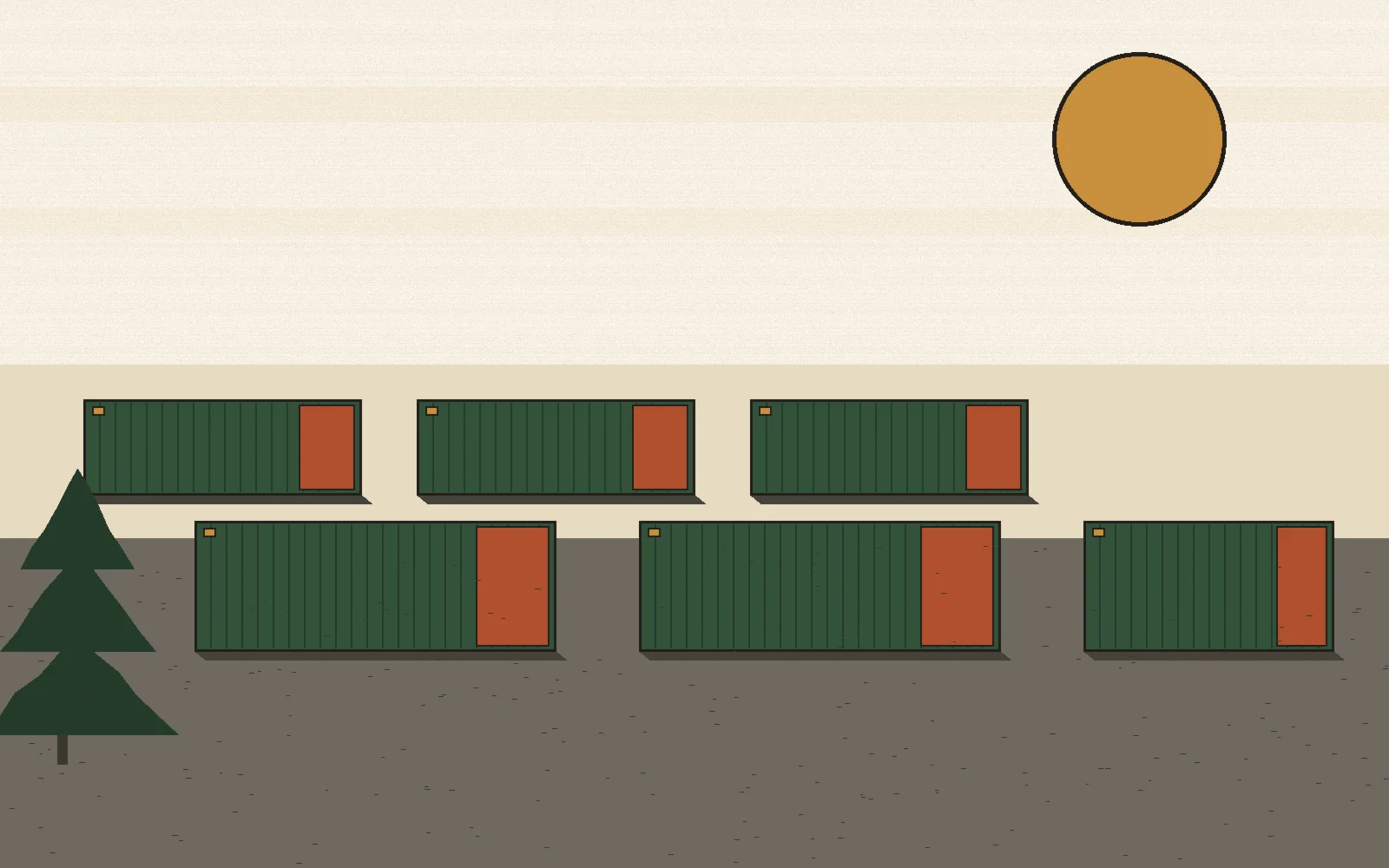
If you pay a Georgia Power bill, a planning document approved in an Atlanta hearing room in July decides what your money builds for the rest of the decade. It is called the integrated resource plan, the three-year filing in which the utility tells the Georgia Public Service Commission how it intends to keep the lights on, and the 2025 edition is the first to treat battery storage as freight to be scheduled rather than a pilot to be admired.
The numbers are easy to say and hard to feel. The plan projects roughly 8,200 megawatts of new electric load by 2031, driven overwhelmingly by data centers and industrial growth. To serve it, the Commission approved at least 6,000 megawatts of new renewable energy between 2029 and 2031, with authority to go as high as 8,500 megawatts if need is shown, alongside new gas turbines and a slow walk on some coal retirements. This desk will argue the fuel mix in future entries. The storage half of the plan is the story this week, because it is already leaving tracks in the clay.
A plan approved in July, with cargo to move
The Commission approved the plan on July 15, 2025, as a settlement among the company, its staff, and a room full of intervenors. Buried in the stipulation is the shift: nine new battery storage facilities totaling nearly 3,000 megawatts, the largest storage commitment Georgia has ever made, and a follow-on request filed two weeks later asking the Commission to certify roughly 9,900 megawatts of new resources, including 1,886 megawatts of storage paired directly with solar arrays. Certification is the legal step that lets construction costs flow into rates, which is why the July 31 filing matters more than any ribbon cutting.
None of this appeared from nowhere. The 2022 plan authorized a first competitive solicitation for 500 megawatts of storage, the deal that taught the company how to buy batteries. Four years later the order of magnitude tripled. That is what load growth does to a planning document.
First steel in the clay
Drive south of Valdosta and the abstraction gets a fence line. In July 2026, Georgia Power marked completion of the Moody Battery Facility, a 49.5 megawatt system in Lowndes County built to discharge for about four hours, one of the company's first storage sites wired beside solar. It sits in a four-county construction wave the company announced this spring: 765 megawatts of storage under way in Bibb, Lowndes, Floyd, and Cherokee counties, all authorized through the resource plan process.
The map keeps filling in. A 200 megawatt standalone project in Twiggs County, near Macon, started construction in late 2025, and a 260 megawatt system broke ground near Wadley in Jefferson County this year, set next to an existing solar site and the transmission line that serves it. Each yard is the same machine wearing county clothes: containers, inverters, a substation tie, and a control room that decides, every few seconds, when to buy the sun back from the sky.
The evening is the load that pays
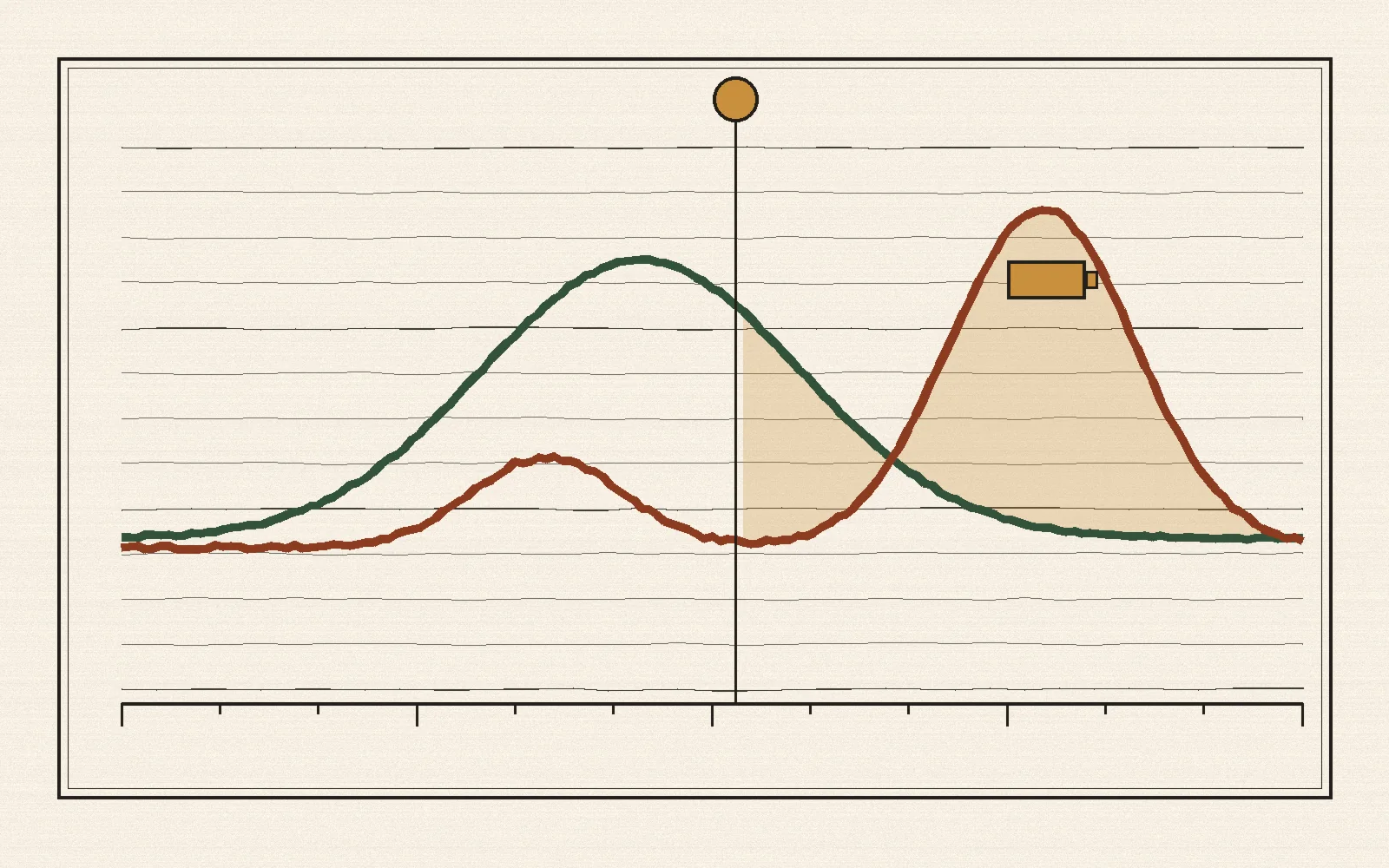
Georgia solar follows the same bell curve as the sun. It peaks near midday, sags through the afternoon, and is gone by dinner, while demand in this state crests in the early evening, when air conditioners are still paying off the afternoon and homes light up together. A solar panel earns its keep at noon; a battery earns it at seven in the evening. That gap, and the price difference across it, is the entire business case the Commission just certified, and it is why nearly every approved project is paired with solar or sitting beside it.
The pipeline is not finished. On June 9, 2026, the company opened a request for proposals for 2,000 to 6,000 megawatts of capacity resources with 2032 and 2033 online dates, the next round of the same cargo manifest. What fuel wins that round, and how much of it stores rather than burns, is the clean-energy question of this decade in Georgia.
No grid operator, just a 15-minute market
Georgia is not in a regional transmission organization, which surprises people who assume every state has one. There is no independent dispatcher running an auction for Georgia electricity. Instead, the Southeast Energy Exchange Market, a platform owned by member utilities including Georgia Power, Duke, Dominion, and Santee Cooper, has matched 15-minute bilateral trades since November 9, 2022. Federal regulators reaffirmed its rules in March 2025, and renewable-energy trade groups keep pressing for something with more teeth, arguing the exchange leaves savings on the table.
The backdrop to all of it is concrete and famously over budget. Plant Vogtle Units 3 and 4, the two Westinghouse AP1000 reactors near Waynesboro, entered commercial operation on July 31, 2023 and April 29, 2024, roughly 2,234 megawatts of carbon-free power combined, of which Georgia Power owns about 45.7 percent. The new units added roughly 5 percent to average base rates starting in May 2024, on the order of $9 a month for a typical residential customer using 1,000 kilowatt-hours. Vogtle is the floor under the state's grid. The battery yards are how the state plans to stop pouring new concrete every time the evening peaks.
What it means for your bill
Storage is not free, and in Georgia, certified costs come back through rates. The honest near-term answer is that the build-out adds to bills already carrying Vogtle, fuel riders, and transmission work; the company filed three separate interim fuel rider notices with the Commission this spring alone. The settlement that approved the plan included a counterweight with a number attached: if revenue from new large-load customers, chiefly data centers, fails to put expected downward pressure on rates, residential customers receive credits on the order of $8.50 a month in 2029 through 2031. Whether that clause ever triggers is the single most financial question in this plan, and it depends entirely on whether the data centers in the pipeline actually plug in.
The slower risks are the usual ones. Battery supply chains swing with trade policy. Interconnection queues run long. The same plan that certified the batteries also leaned on gas for a large share of the 9,900 megawatt request, and an environmental law center that intervened called it an astonishing bet on fossil fuel on the strength of growth that has not arrived. Schedules slip, and this page will say so when they do.
Worth watching this week
- The certification docket on the roughly 9,900 megawatt request, filed July 31, 2025: watch which of the nine battery facilities get final certification, the step that locks costs into rates. Routine paperwork, but it is the paperwork that counts.
- Award notices for the storage solicitation that grew out of the 2022 plan: proposals were due in early 2026, so winning projects could be named any quarter now. This one matters.
- The 2,000 to 6,000 megawatt capacity request opened June 9, 2026: the mix of storage, solar, and gas it produces will set the state's emissions path into the 2030s. The biggest item on this list.
- Interim fuel rider filings at the Commission: three notices arrived this spring, and each one moves the fuel-cost line on your bill. Routine, but it hits monthly.
- Completion dates on the four-county 765 megawatt construction program: Moody set the pattern near Valdosta; the next ribbon cuttings tell you if the schedule is real.